Gravel by the Tonne: How to Order Bulk Gravel in Australia Without Getting the Wrong Product for Your Project
Here’s a scenario that keeps playing out on Australian job sites more than anyone really wants to admit: the gravel turns up, it goes down, and before you know it, someone realises it’s just not the right stuff. Not the wrong colour, the wrong product. They bring in drainage gravel for a driveway, decorative pebble for a soak well, or crushed rock when free draining material was needed. Fixing the problem means ripping everything up, chucking the wrong product, and ordering again. It’s an avoidable expense, and it starts with actually getting your head around what the main product categories are before phoning up the supplier.
The Main Gravel Types & What They’re Actually For
Bulk gravel isn’t one product that’s just a category that covers a heap of different materials, each with their own unique physical properties and uses. Treating them as if they’re all the same is where the ordering mistakes start to happen.
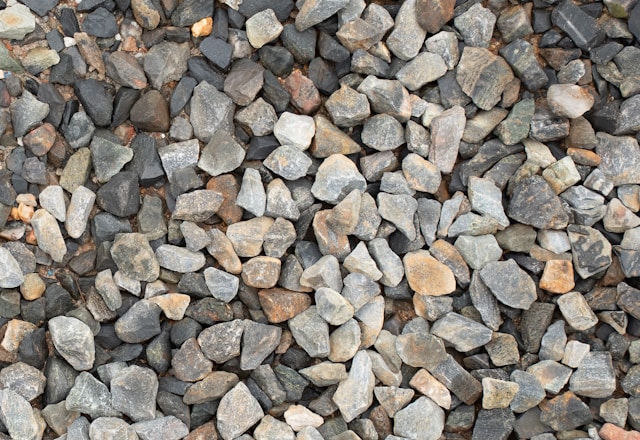
- Crushed rock gets its angular edges from being crushed, and those edges are what make it interlock when you compact it it’s this stuff that’s best for driveways, hardstands and compactable base layers, so you should only use it for those jobs.
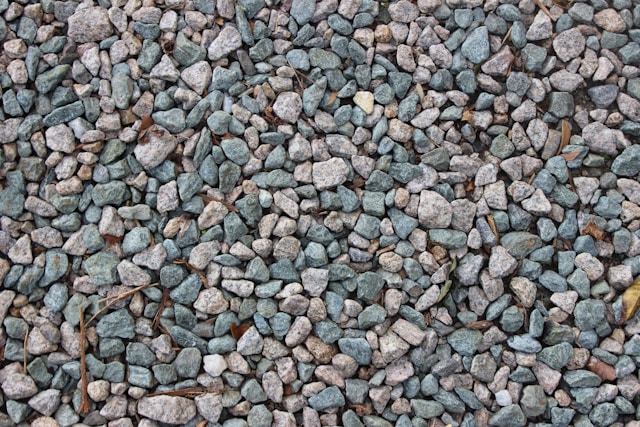
- Drainage gravel is designed to be rounded and free draining; round particles don’t compact so you need this stuff for applications around soak wells or French drains where you don’t want the water just settling and stopping.
- Roadbase is a specially blended mix of different materials designed for vehicle bearing surfaces (basically where cars are going to be driving over it). It’s different from crushed rock in terms of how the different particles are sized, and that’s what makes it stable when you compact it.
- Decorative gravel is all about looking pretty for paths and garden beds and should never, ever be used in situations where it has to bear any weight.
Mixing up drainage gravel with crushed rock is just a disaster waiting to happen you’ll end up with a drainage failure. Using decorative pebble around a soak well and it won’t even work properly. And neither problem is cheap to fix after the fact.
How To Figure Out What You Actually Need?
The volume calculation is pretty simple: length, width and depth, all in metres, multiplied together gives you the volume in cubic metres. The problem is most bulk gravel suppliers quote in both cubic metres and tonnes, and the density can vary depending on the product. Crushed rock and roadbase are around 1.5 to 1.8 tonnes per cubic metre; decorative products are a lot lighter. Get the specific density from the supplier before you start trying to convert between units.
Add 10 to 15 percent to the calculated volume before you order. Gravel settles under its own weight, and under compaction so the actual volume you’ve got in position at the end of the job will be less than the volume the truck delivered, and that difference is just absorbed by the settling. The cost of having to make a second delivery is always going to exceed the cost of just making sure you’ve got enough to go around.
Why The Grade Of Gravel Matters For Drainage Applications?
In Western Australia where stormwater management and sandy soils mean that soak wells are basically a given on most residential blocks, drainage gravel is one of the most common products that people order from bulk gravel suppliers and it’s also one of the most frequently miss specified.
The grade or particle size of the gravel makes all the difference in how water moves through it, especially when it comes to stuff like soak wells or French drains. If it’s too fine, the particles will compact over time and start restricting the flow. For guidance on stormwater management and drainage requirements in WA, EPA Western Australia publishes standards that apply to residential and commercial drainage installations.

What To Expect When You Order A Bulk Delivery In Perth?
The method used in bulk deliveries of gravel involves delivery through the tipping truck in one spot. The delivery of such bulk delivery has effects on whether it can be easy or challenging.
- Ensure there is adequate truck clearance and turning room for the truck before making any arrangements; the fully loaded tipping truck requires a lot more room compared to other suburbs’ driveways.
- Ensure there is enough flat deposit area; this will ensure the load is not dispersed in drains, footpaths, and the neighbour’s premises.
- Ensure you know the minimum order quantity and delivery time of the supplier before making any orders; suppliers have different lead time, and the assumption of the same week delivery is not always correct.
- Discuss any site access issues with the supplier when you are making your orders; the discussion will be of great help before delivery than during delivery.